AI SEO Tools &
Semantic Search.
// Quick Answer
The integration of artificial intelligence into SEO is revolutionizing how content is created, optimized, and ranked. This guide explores how AI reshapes SEO through semantic search, the implications of Google algorithm updates like BERT and MUM, and the automation tools that can help optimize content for better ranking.

How is AI Transforming Traditional SEO Practices?
AI is fundamentally changing the landscape of SEO by introducing advanced algorithms that enhance the way search engines interpret and rank content. Traditional SEO methods often relied heavily on keyword density and backlinks, whereas AI-driven SEO focuses on understanding user intent and context.
In this evolving landscape, businesses are increasingly adopting AI-driven SEO tools to stay competitive. These tools not only automate routine tasks but also provide insights that were previously unattainable. By leveraging machine learning and natural language processing, companies can optimize their content for semantic search.
// AI-Driven vs Google-Centric
AI-driven SEO differs from traditional Google-centric methods primarily in its approach to understanding user intent. While Google-centric methods focus on specific keywords, AI-driven SEO utilizes algorithms that analyze user behavior and preferences for more nuanced content optimization.
// Machine Learning & SEO
Machine learning enhances SEO effectiveness by enabling algorithms to learn from data and improve over time. This technology allows for the analysis of user interactions, helping to identify which content performs best and why.
Fundamentals of Semantic Search Optimization
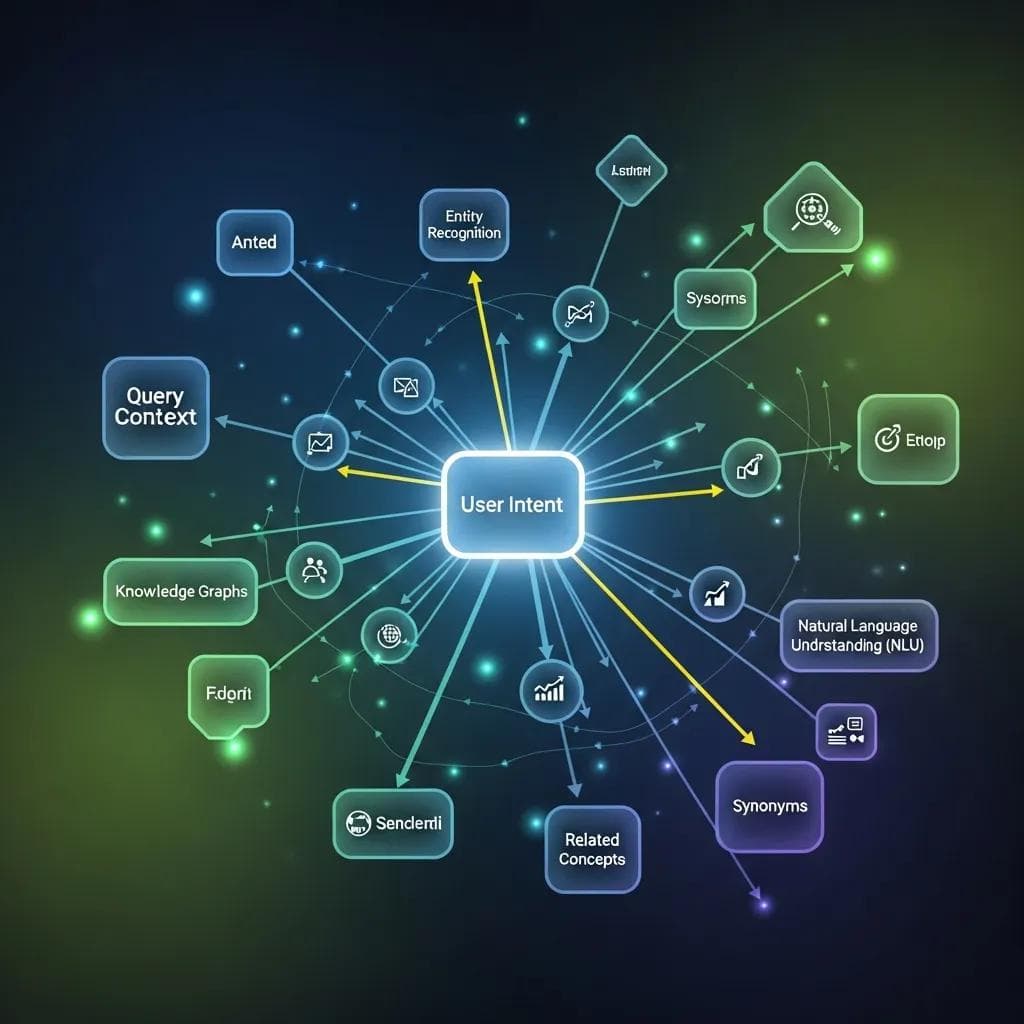
Semantic search optimization focuses on improving the relevance of search results by understanding the context and intent behind user queries. This approach goes beyond traditional keyword matching, emphasizing the importance of entities and their relationships.
// Entity Understanding
Entity understanding significantly improves search relevance by allowing search engines to comprehend the context of a query. For example, if a user searches for "Apple," the search engine can determine whether the user is looking for the technology company or the fruit based on surrounding context.
// Schema.org Impact
Implementing structured data using schema.org can significantly enhance SEO visibility by providing search engines with clear information about the content of a webpage. Schema.org is used by over 12 million domains and backed by Google, Bing, Yahoo!, and Yandex.
// Key Schema Types for SEO
Article Schema
Helps search engines understand content type and context, improving rich results.
Product Schema
Detailed product info including pricing and availability for e-commerce visibility.
Local Business Schema
Optimizes local search with essential business info like location and contact details.
Google Algorithm Updates & AI Technologies
Recent Google algorithm updates have increasingly incorporated AI technologies to enhance search result accuracy and relevance. Updates like BERT and MUM utilize natural language processing to better interpret complex queries and deliver more relevant results.
// BERT
BERT (Bidirectional Encoder Representations from Transformers) allows the search engine to grasp the nuances of language, improving its ability to interpret user queries accurately. Particularly beneficial for long-tail keywords and conversational queries.
// MUM
MUM (Multitask Unified Model) enables Google to process information across different modalities, such as text and images. Users receive comprehensive answers to complex questions, even if information is spread across various formats.
// Impact on Content Strategy
Content creators must prioritize quality and relevance over keyword density. This means focusing on creating comprehensive, informative content that addresses user intent and provides value. Optimizing for semantic search—using natural language, incorporating relevant entities, and implementing structured data—becomes crucial.
AI SEO Tools & Automation Techniques
AI SEO tools and automation techniques play a vital role in enhancing content ranking by streamlining processes and providing valuable insights. These tools can analyze vast amounts of data, identify trends, and optimize content more efficiently than manual methods.
Surfer SEO
Data-driven insights for optimizing content based on top-ranking pages.
MarketMuse
AI-powered content analysis with suggestions for better relevance and depth.
Clearscope
Enhanced content optimization with keyword suggestions and readability scores.
// Key Features
- →Data Analysis — Analyze large datasets to identify trends and insights
- →Content Optimization — Recommendations for improving relevance and quality
- →Automation — Automate routine SEO tasks for efficiency
// Workflow Automation
Automation can significantly streamline semantic SEO workflows by reducing time spent on repetitive tasks. Automated tools handle keyword research, content optimization, and performance tracking, allowing marketers to focus on strategy and creativity.
Future Trends in AI-Driven SEO
As AI technology continues to evolve, several trends are emerging that will shape the future of SEO and semantic search. These include the increasing importance of voice search, the rise of visual search, and the growing emphasis on user experience.
// 2026 & Beyond
By 2026, AI advancements are expected to further refine SEO strategies, making them more data-driven and user-centric. The integration of AI will lead to more personalized search experiences, where content is tailored to individual preferences and behaviors.
// Semantic Web Technologies
Emerging technologies such as knowledge graphs and linked data are set to impact search optimization significantly. These enable search engines to understand relationships between different entities, improving the accuracy of search results.
// Source 01
AI's Revolutionary Role in SEO & Semantic Search
C. Ziakis, 2023 — Explores how generative AI and NLP are leveraged to boost SEO and provide more user-centric search results.
// Source 02
Schema.org for Semantic SEO & Rich Results
A. Isaac, 2017 — Schema.org metadata used by 12M+ domains, underpinning Semantic SEO techniques.
// Source 03
BERT & Deep Learning for Document Ranking
G. Dhopavkar, 2024 — How deep learning and BERT have created new opportunities in document ranking procedures.
Want to Rank on Google and AI Search?
NeurStack's AISEO methodology is purpose-built for the AI-first web. We engineer your content to rank across Google, ChatGPT, and Perplexity simultaneously.